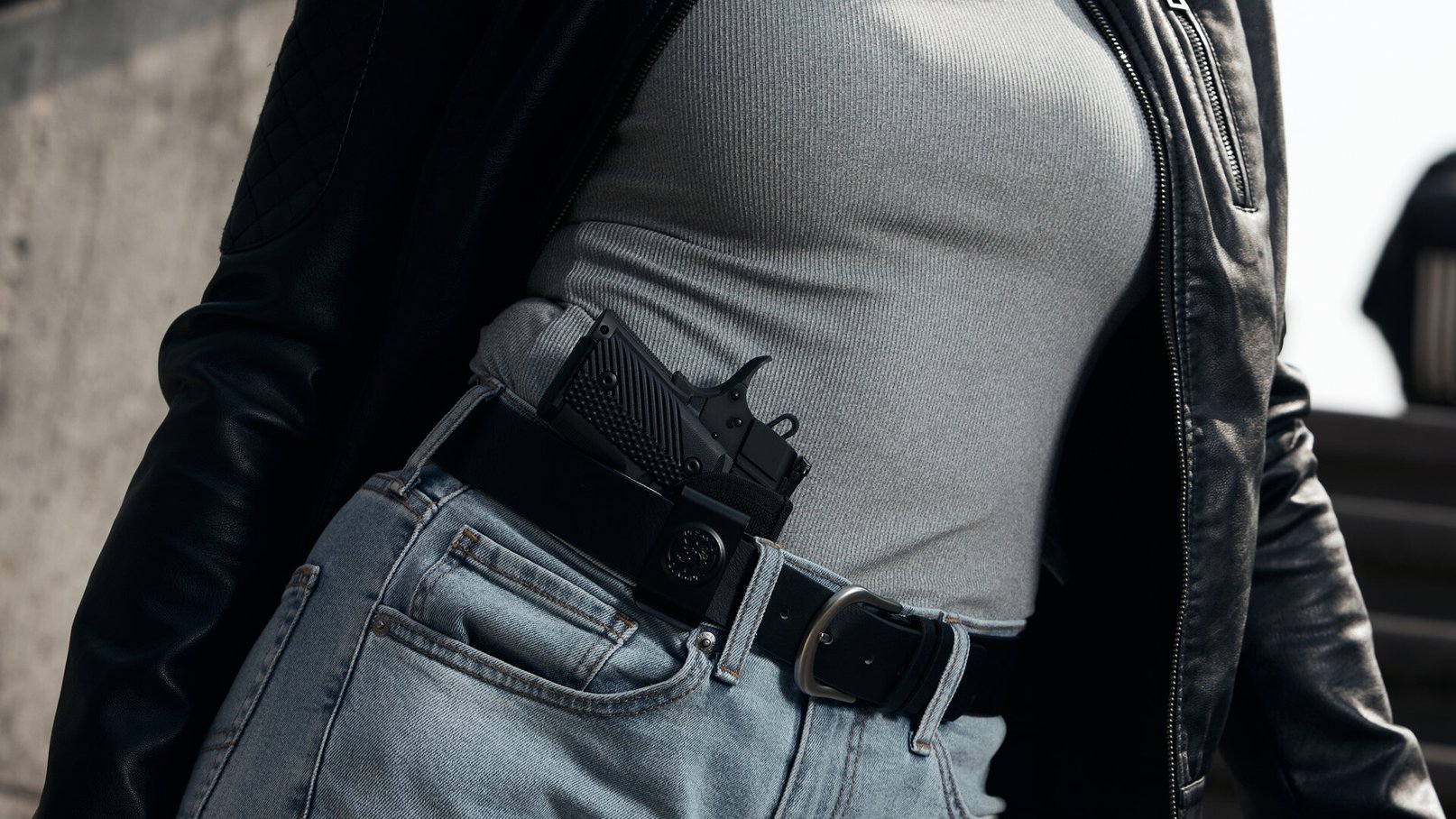
Concealed Carry Setup Basics
Building a System, Not Just Carrying a Gun
Most people think concealed carry starts and ends with choosing a pistol. Pick a gun, grab a holster, and you're done. But if you've spent any time in a professional or tactical environment, you know that a firearm alone is not a system — it's a starting point.
A complete carry setup is designed around one core philosophy: your gun should be ready for the worst moment of your life the second you draw it. That means optics, lighting, and trigger performance aren't optional upgrades. They're mission critical components.
Here's what a complete system looks like and why each piece matters.
The Red Dot: Why Iron Sights Aren't Enough Anymore
For decades, iron sights were the standard for concealed carry. They work. Nobody is arguing that. But the data on stress-induced performance tells a different story about what happens when your heart rate spikes and your fine motor skills degrade under threat.
Under stress, your eyes naturally focus on the threat — not the rear sight, not the front sight. Iron sight shooting requires a precise three-point alignment that becomes increasingly difficult to execute when adrenaline takes over. A red dot changes that equation entirely.
With a quality pistol optic you're working with a single focal plane and that is a cheat code that changes everything. Your eyes go to the target, the dot appears, and you press. There's no sight alignment to manage. No front-rear-target triangle to line up. The cognitive load drops significantly and that matters when seconds count.
When selecting a red dot for a carry gun look for these qualities — robust aluminum or titanium housing, waterproof construction, and shock resistance are essential. Reliable power management so you're never caught with a dead optic. Auto-brightness adjustment so the dot stays visible across all lighting conditions from a dark parking garage to bright Florida sunlight.
Bottom line: A red dot on a carry gun isn't a competition accessory. It's a performance enhancement that makes you faster and more accurate under the conditions that actually matter.
The Weapon Light: You Cannot Shoot What You Cannot See
This one is non-negotiable. If you carry a firearm for personal protection and it does not have a weapon mounted light, you are accepting a significant gap in your capability.
The majority of defensive shootings occur in low light or no light conditions. Your ability to identify a threat before you engage is not just a tactical advantage — it's a legal and moral requirement. Lethal force decisions require target identification. A weapon light makes that possible in conditions where your eyes alone cannot.
When selecting a weapon light for your carry platform the most important factor is purpose built fit. A light designed specifically for your pistol sits flush, doesn't print under a cover garment, and integrates with the holster ecosystem built around that gun. A universal light that doesn't fit the platform properly creates snag points, holster compatibility problems, and a setup that won't perform reliably under stress.
A common concern with weapon lights is holster compatibility. This is a real consideration — you cannot run a light bearing setup without a holster designed for it. Before committing to a weapon light confirm that quality holster options exist for your specific gun and light combination.
Bottom line: A weapon light is not optional. It is the difference between identifying a threat and making a decision you cannot take back.
The Trigger Shoe: Consistency Without Compromising Internals
The factory trigger on most quality carry pistols is reliable. Manufacturers have sold tens of millions of pistols on that reliability and nobody serious argues against it. But reliable and optimized are two different things.
It is important to understand what a trigger shoe upgrade actually is and what it is not. A trigger shoe is the part your finger contacts — the face of the trigger itself. Swapping the trigger shoe is a straightforward drop-in modification that replaces only the external trigger component while leaving all internal safety mechanisms, the trigger bar, connector, and firing pin assembly completely untouched and factory stock. The Safe Action system, drop safety, and firing pin safety remain fully intact and unmodified.
This matters enormously on a carry gun. We are not reducing pull weight, modifying springs, or touching anything that affects the fundamental safety of the firearm. What a quality trigger shoe delivers is a better interface between your finger and the trigger — a flatter face that promotes a more consistent straight-back pull, a more defined reset for faster follow-up shots, and improved tactile feedback round after round.
For a carry gun this is the only type of trigger work that makes sense. You are optimizing the feel and consistency of the trigger press without introducing any variables that could affect reliability or safety. The gun functions exactly as the manufacturer intended — it just feels better doing it.
Bottom line: A trigger shoe upgrade on a carry gun improves consistency and control without touching internals or compromising safety. The factory safety systems remain fully intact. The result is a more predictable trigger press when predictability matters most.
The Extended Magazine Release: Small Detail, Real Impact
This one gets overlooked but earns its place on every serious carry build. Under stress, gross motor skills replace fine motor skills. Your hands get less precise, not more. An extended magazine release means a faster, more reliable reload when your fine motor control is compromised. It costs almost nothing to add and delivers a genuine performance benefit in a high stress situation.
The System Concept: Why All of This Matters Together
None of these components exist in isolation. A red dot without a weapon light leaves you unable to use your optic effectively in low light. A weapon light without a quality trigger means your shooting fundamentals are working against you. A premium trigger shoe on a gun with no optic means you're still fighting the iron sight problem under stress.
A complete carry build is engineered as a system. Every component is selected to complement every other component. The result is a carry gun that performs at its ceiling the moment you need it — not after you've spent months sourcing parts, testing combinations, and hoping everything works together.
Continue the Mission means showing up prepared. Your carry setup should reflect that standard.


